



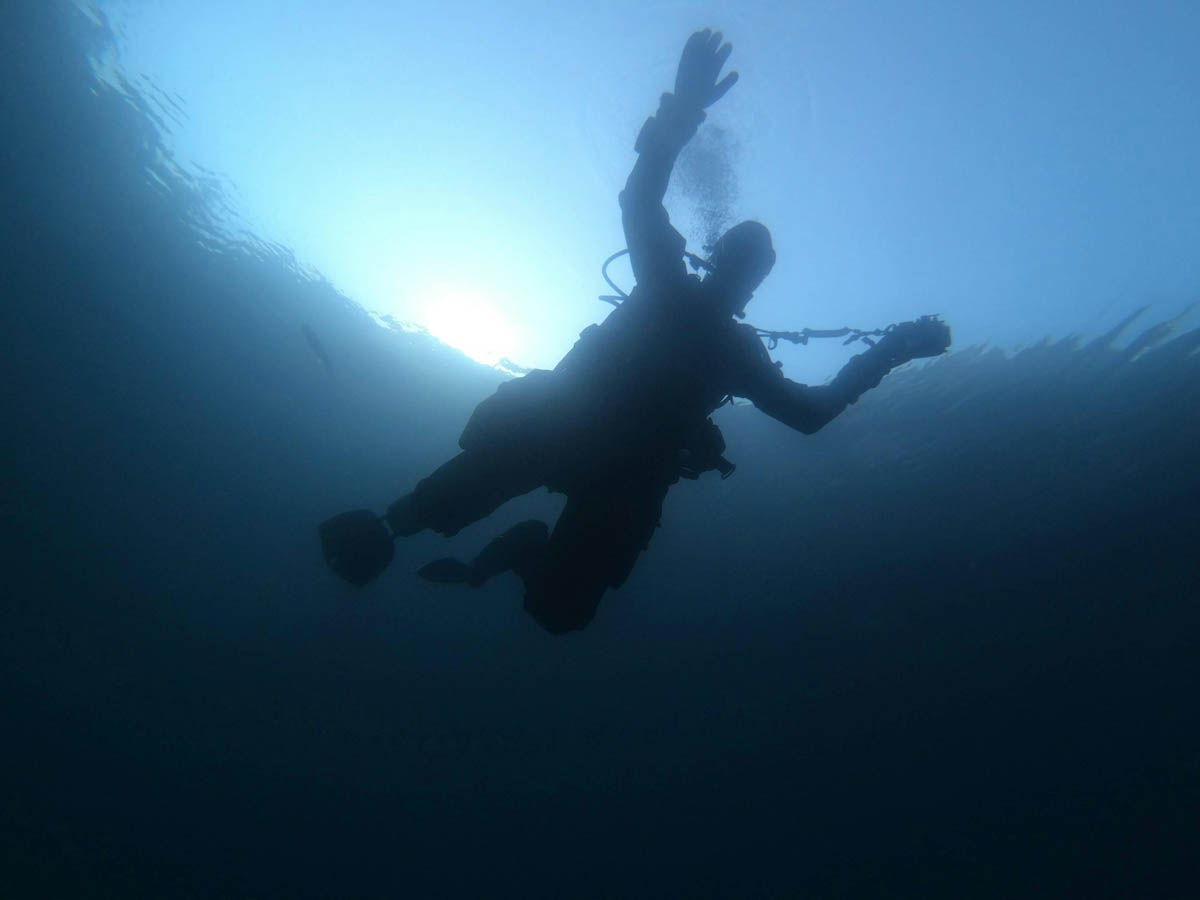

There is no single headline driving concern right now. No global warning, no major announcement. But when you step back and look at how diving is evolving, a quieter shift is becoming harder to ignore.
Some of the most sought-after dive destinations in the world are also becoming more complex to manage safely.

Not because standards are dropping, but because the way divers are choosing to explore the ocean is changing.

The Move Toward More Remote Diving
Divers are travelling further than ever. Remote reefs, offshore pinnacles, and expedition-style itineraries are no longer niche experiences reserved for technical divers.
They are becoming mainstream.

With that shift comes a fundamental change in risk profile. As highlighted in safety insights published by the Divers Alert Network, incident outcomes are heavily influenced by response time, access to medical care, and evacuation logistics, all of which become more challenging the further a diver is from infrastructure.
This does not make remote diving unsafe. It makes it less forgiving.
When Infrastructure Is No Longer Invisible
In well-established dive destinations, safety systems are often taken for granted. Hyperbaric facilities, coast guard coordination, and emergency transport networks are in place, even if most divers never need them.
In remote regions, those systems may exist, but they are not always immediate.
Guidance from training agencies such as PADI continues to emphasise the importance of dive planning, situational awareness, and choosing appropriate operators, but these decisions carry more weight when help is hours away rather than minutes.
This is where the real shift is happening.
The Expectation Gap
Modern dive marketing, particularly through visual platforms, presents remote locations as seamless, effortless experiences.
What is often less visible is the operational complexity behind those trips.
Experienced crews, detailed briefings, and conservative dive planning are what make these itineraries work safely. When divers underestimate that complexity, the gap between expectation and reality begins to widen.
That gap is not new. It is simply becoming more common.
The Pressure to Tick Off Bucket List Dives
There is also a behavioural element.
More divers are building “must-do” lists and prioritising iconic sites without always aligning them with their current level of experience. Strong currents, deep profiles, and exposed locations are no longer seen as advanced challenges. They are seen as standard.
The destination itself is not the issue. The timing, preparation, and decision-making are.
What Experienced Divers Are Doing Differently
Divers who spend more time in remote environments are not avoiding these trips. They are approaching them with more intent.
They are:
- researching operator safety standards
- understanding evacuation realities
- matching destinations to actual experience levels
- asking more specific questions before booking
They are also recognising that remoteness is not just part of the appeal. It is a variable that needs to be actively managed.
The Reality in 2026
Diving is not becoming inherently more dangerous. Equipment, training, and awareness continue to improve.
But the environments divers are choosing are changing faster than behaviour in some cases.
Remote diving offers extraordinary experiences. It also requires a different mindset.
The best dive in the world is still the one you come back from, and increasingly, that comes down to the decisions made long before you enter the water.
Comments



1 Comment
Can you give a couple of examples? This is a VERY general article seeming to obviously favor established dive areas.